

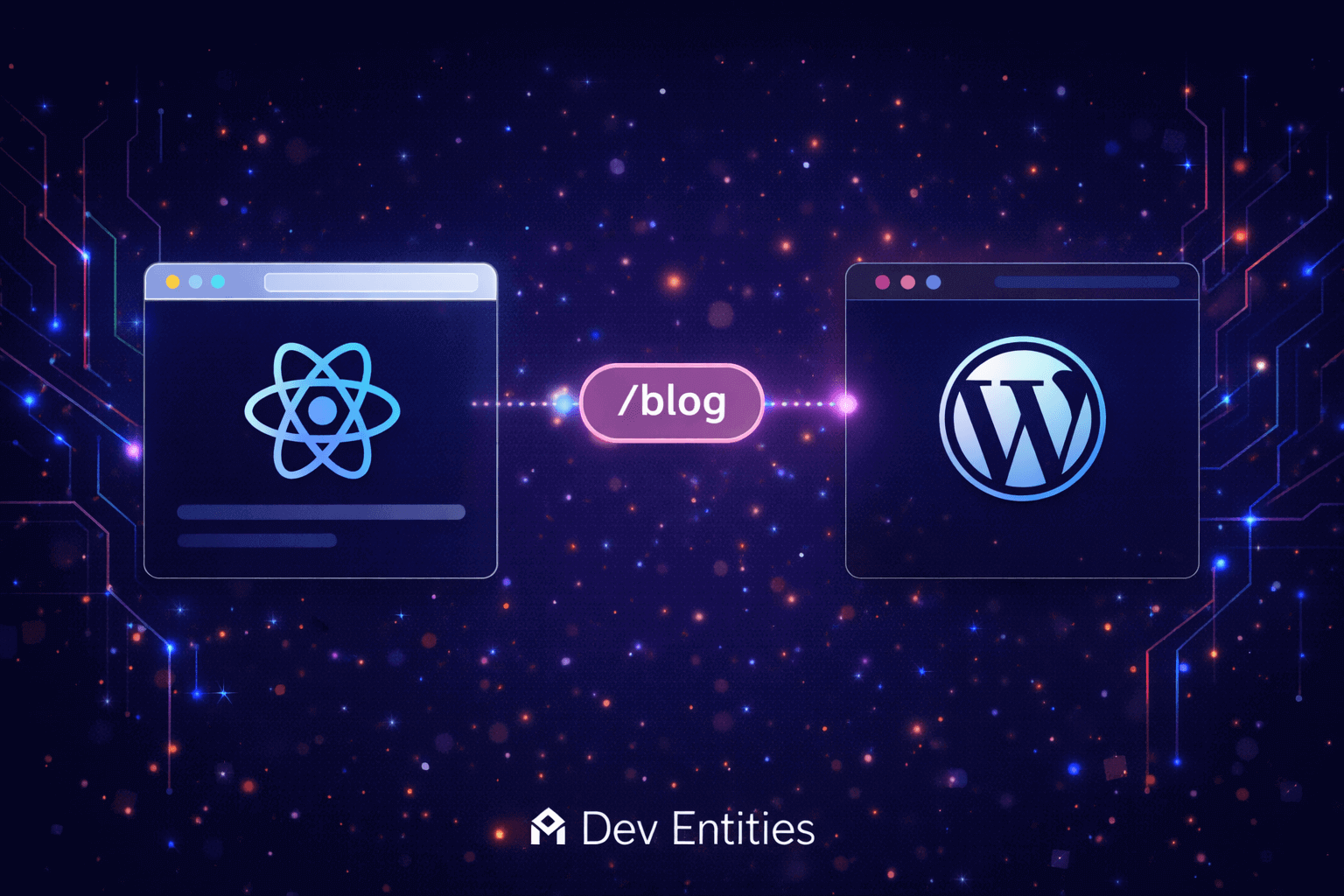
A WordPress blog on React is one of the most common setups we see for modern software company websites. Teams build the main site in React or Next.js for speed and design control, then they need WordPress for publishing. The challenge is keeping SEO clean while shipping fast.
In most cases, you want your blog at yourdomain.com/blog, not blog.yourdomain.com. A subdirectory keeps authority under one domain, which is usually better for long term SEO. The key is implementing it without duplicate URLs, broken sitemaps, or messy redirects.
In this guide, we explain the two best approaches for a WordPress blog on React and share a launch checklist that helps you avoid SEO mistakes.
WordPress blog on React: reverse proxy vs headless
There are two reliable ways to run WordPress under a React or Next.js website. Both can be SEO safe when implemented correctly, but they differ in complexity and long term maintenance.
| Approach | Best for | Pros | Tradeoffs |
|---|---|---|---|
| Reverse proxy WordPress at /blog | Shipping fast with classic WordPress workflow | Plugins work, quick to launch, easy editing | Needs careful redirects, canonicals, caching |
| Headless WordPress with React or Next.js | Maximum performance and full rendering control | Unified design, strong CWV potential, full SEO control | More engineering time, preview and rendering work |
Option A: reverse proxy WordPress at /blog
This is the fastest way to ship a WordPress blog on React while keeping WordPress admin and plugins working normally.
How it works
- Your React or Next.js site stays on the main domain
- Requests to /blog are proxied to WordPress
- WordPress generates public URLs under /blog
SEO essentials for reverse proxy
To keep SEO clean, these are non negotiable:
- Canonical tags must point to the final /blog URLs
- Sitemaps must list /blog URLs, not internal hostnames
- Enforce one trailing slash policy consistently
- Avoid duplicate routes that expose the same post in two places
Need a WordPress blog on React without SEO issues?
Dev Entities is a US based software services company that implements clean /blog setups with proper canonicals, sitemap alignment, and performance best practices so your content can rank without breaking your stack.
Free consultation: Share your current stack and hosting setup. We will recommend the best approach and provide a deployment checklist your developer can follow.
Option B: headless WordPress with React or Next.js rendering
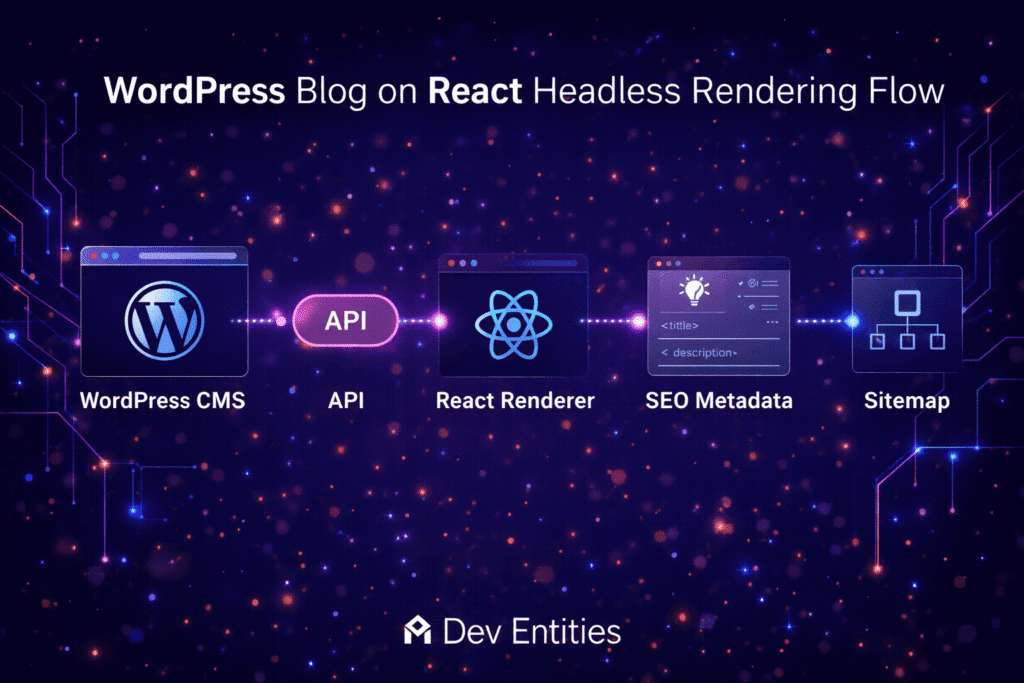
In a headless setup, WordPress is only the CMS. Your React or Next.js application renders posts by calling the WordPress API.
SEO essentials for headless
A headless setup gives you control, but you must implement the basics properly:
- Metadata, Open Graph, and structured data
- Sitemap generation and RSS feeds
- Pagination, category archives, and canonical strategy
WordPress blog on React: SEO fundamentals
No matter which approach you choose, these fundamentals decide whether your content ranks.
- Canonicals: Every page must declare the correct final URL under /blog.
- Sitemaps: Ensure the sitemap includes blog URLs and is accessible to search engines.
- Internal linking: Link posts to service pages and case studies, and link those pages back to posts.
- Schema: Use Article, Organization, and Breadcrumb schema at minimum.
- Archives: Avoid thin category pages. Add a short intro and keep categories focused.
Launch checklist for /blog
- /blog pages return 200 status codes
- One trailing slash policy is enforced
- No mixed content (all assets served over https)
- robots.txt allows /blog crawling
- Sitemap includes /blog URLs and is submitted in Search Console
- Canonical tags are correct on posts, archives, and pagination
- Open Graph and Twitter cards are correct
- 301 redirects are set for any older URL structures
- Core Web Vitals are checked for blog pages
- Images are optimized and lazy loaded
- Caching does not break wp-admin sessions
Further reading
Conclusion
Both reverse proxy and headless can work. The best approach is the one that lets you publish consistently while keeping SEO signals consolidated under /blog.
If you want a clear recommendation for your current setup, we can review your stack and map the cleanest approach with an implementation checklist.
Want a clean WordPress blog on React plan tailored to your site?
Book a free consultation and we will outline the exact setup, SEO checklist, and deployment steps based on your stack.